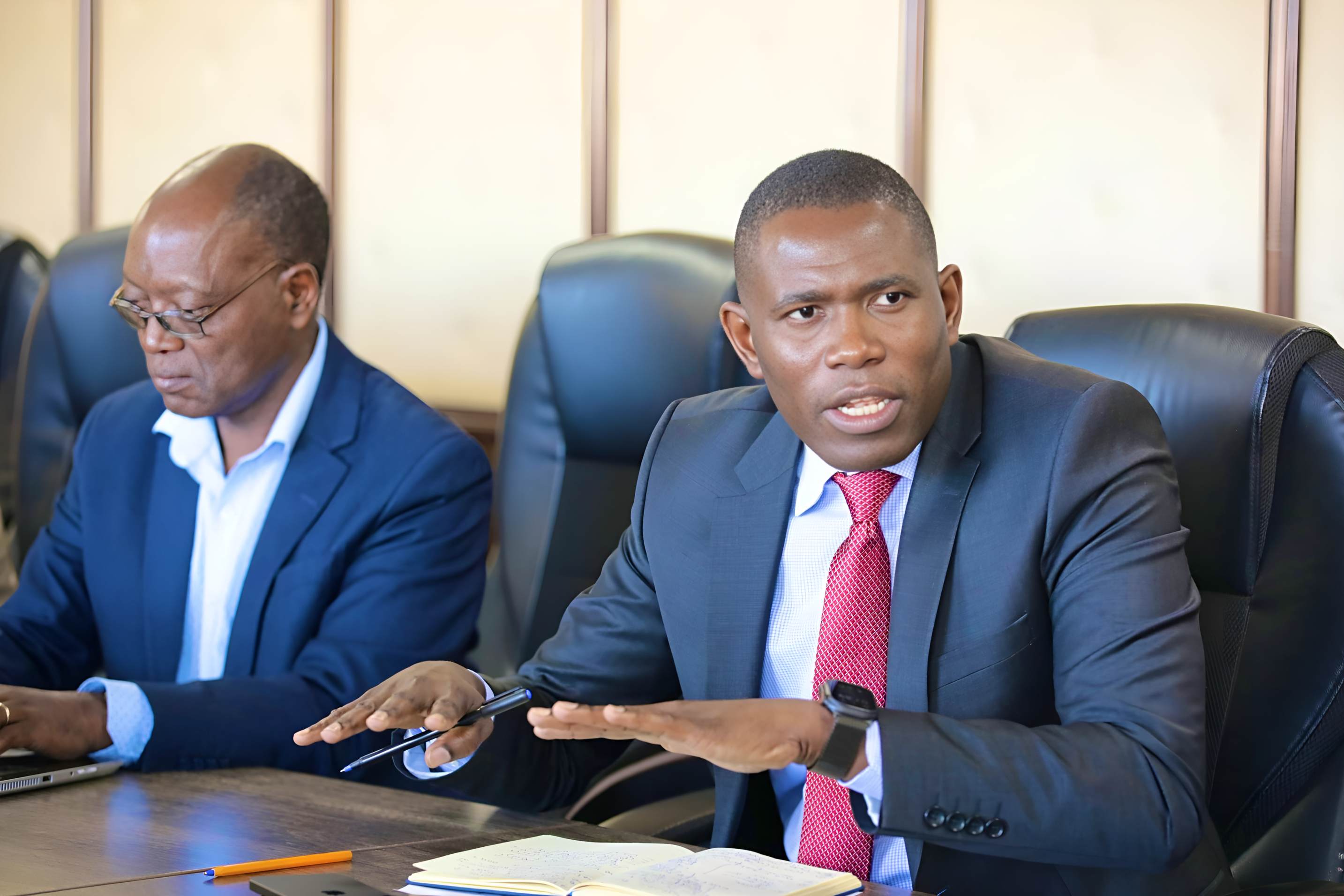
Medical Services Principal Secretary Ouma Oluga has assured Kenyans that the government will not hand over patient specimens to any foreign partners, emphasizing that all health data and laboratory materials will continue to be governed strictly under Kenyan law.
Speaking during an interview on NTV on Monday, Oluga said there has been widespread misunderstanding about the recently announced health Cooperation Framework between Kenya and the United States.
He clarified that, although the framework includes collaboration on research and disease surveillance, Kenya refused any proposal for specimen-sharing.
“I want this country to understand that you have professionals in this country who are competent,” he said. “We did not negotiate a specimen-sharing agreement… They really wanted it, but we said, wait a minute, no, we will not do it.”
Oluga explained that the framework produces three documents: an implementation agreement, a financing agreement, and a data-sharing framework.
He acknowledged the heightened public interest around data protection but said Kenya has already invested heavily in building one of the most advanced digital health systems globally.
“At the top, you have registries—patients, health workers, hospitals—and below that is the Health Information Exchange,” he said. “All hospitals plug into this pipeline… This information is in the hands of government, and for you to access it, you have to agree with government.”
He added that the Digital Health Act clearly designates Kenya as the data controller. “All this data will be owned and governed by Kenyan laws,” Oluga said. “Accessing it will require specific conditions.”
Even without specimen-sharing, Kenya will continue joint testing with long-established research partners such as the US CDC, Walter Reed, Kemri-CDC in Kisumu, and other collaborative labs. Oluga said these institutions are deeply embedded in Kenya’s health research ecosystem, and shutting down cooperation would disrupt crucial disease-surveillance work.
“If we say that we are not going to test pathogens together, then it means that tomorrow it closes shop,” he said.
However, he was firm that any samples used in joint testing are anonymized long before reaching research laboratories.
“By the time a sample leaves the hospital, it has no identity. It is a sample,” he said. “There is zero specifics.”
Oluga also pointed out that Kenya still relies on international partners for certain high-level tests, including vaccine efficacy and some pathogen identification.
“Until recently, you could not test polio in-country—not Kenya, Africa,” he said. “Apart from South Africa, there is no other capacity to test vaccines in the entire continent.”
He urged the public to view the cooperation realistically. “The President wants to make us a first-world country, but we are not first world now,” he said, stressing that these partnerships strengthen Kenya’s health system while keeping ownership of data and specimens firmly in Kenyan hands.































Comments
Sign in with Google to comment, reply, and like comments.
Continue with Google